from an Anonymous Contributor
Today is Sunday, which for me means two things: church (although I sometimes attend Saturday evening vigil mass) and PostSecret.
PostSecret has been my Sunday morning companion for something like nine years now. For those who don’t know, it’s a community art project where anonymous strangers send postcards confessing their secrets; select postcards are scanned and posted online, others are used in travelling exhibits, still others are shuffled away in a box somewhere—or for all I know, destroyed—never to be seen again. The website is updated promptly every Sunday.
I get a voyeuristic pleasure from reading these secrets. It’s human nature. Some of them I identify with, others I empathize with, many I judge with a sneer. Like I said. Human nature. When other people lay their souls bare, it’s hard not to compare yourself to what you see before you. Judgment. It’s easy.
PostSecret also provides a service to the writers of the secrets. We get pleasure from reading others’ secrets, yes, but for some, this website is the only way to unburden themselves of something that has hung over their heads, suppressing their natures. How many postcards have I read thanking PostSecret for being the only one who will listen? Or talking about the weight of a secret having been lifted off of someone because they sent in their postcard?
These postcards are confessions, plain and simple. From our very youngest age of cognizance, we learn to recognize basic right from wrong. We feel badly when we’ve done wrong, and the best way to undo that wrong is to confess it, to go back and try to right it. So Frank Warren, the creator of PostSecret, has provided an outlet into which we might anonymously pour our guiltiest feelings—our deepest and darkest.
It’s a commendable service. Often the secrets sent in are those of unrequited love, clandestine shame, or are addressed to those who have passed out of the secret holders’ lives. The things that are hardest to verbalize, but weigh heaviest on the minds of those they concern. Confession.
I myself have only sent one postcard into PostSecret. I remember sending it in and thinking that maybe I would feel this sense of burden lifted from me. But as I closed the big blue mailbox, I felt nothing significant change. I smiled because I was participating in an art project that I had enjoyed for a few years, but it wasn’t anything earth-shattering.
And I have to ask myself, why?
PostSecret, for all the support it provides to those with secrets—a community of those who may not otherwise have a community—is Confession.
There’s something very human to that word. Confession is an act we commit in response to something we’ve done. Using our own words, we unburden ourselves of the guilt we’ve felt. We can confess to our friends and family, we can confess to our priests and pastors, we can even confess anonymously to Frank Warren and the PostSecret community.
It is a great regret, as a Catholic, that so many of my fellow Catholics call that certain sacrament simply, “Confession.”
Because while, yes, confession is involved in the process of this sacrament, it is simply not the sacrament of Confession.
Keep in mind, Confession terrified me as a child. I went once a year, when my mother hard-handedly forced me because of the upcoming Easter season. I would leave it to the last week I could, I would pray while waiting in line that time would run out before I had to take my turn, and I remember trembling physically before, during and after. It was awful.
And now this is one of my very favorite sacraments.
After years of struggling with this requirement of my faith; several New Year Resolutions; a couple of college-level religion classes; chats with priests, friends, and family; I’ve finally figured out why.
It offers something Frank Warren and the PostSecret community can never offer. It gives us Reconciliation—the proper name for this sacrament.
In stark contrast to Confession’s human restrictions, Reconciliation abounds with God’s unlimited abilities. Humans taint confession with human judgment. That voyeuristic quality PostSecret lends to the process. The sacrament of Reconciliation, however, is the vehicle of delivering the perfect forgiveness that Christ died on the cross to offer us. We break the old covenant with God, and God fixes it.
I undoubtedly hear heavy influences from an argument which seized my interest early in my college career and has doggedly stuck with me ever since—the debate over justification through acts versus justification through faith. I feel that no matter what theological topic I try to discuss, it always comes back to this, and I inevitably side with justification through faith.
One day, I saw one of the giant boards churches like to put up to try to entice you to come to services. Normally I find them trite or bordering on offensive, but this one struck me:
“God gives and forgives. We get and forget.”
Humans can never earn the forgiveness God gives us time and time again. While we, in the act of confession, admit our wrongdoings and acknowledge that in which we have participated to separate us from our God, it is God’s forgiveness which reconciles the covenant between deity and human. There is no anonymity.
Whether a screen is between you and your confessor, as it often is in the Catholic church, or if you’re praying alone in a room where no one can hear you but God, the act of Reconciliation is admitting your sins face to face with your creator. And unlike the human act of confession, where PostSecret-esque anonymity is favored because of judgments which might be passed or opinions swayed, the divine act of reconciliation is as candid and perfect as its creator.
So when I sent in that single postcard to PostSecret, I was confessing, but I didn’t get the sense of relief so many receive from it. My actions cannot relieve me of my secrets; it is my God and my God alone who can do that. It is Reconciliation I have come to expect from unburdening myself of my secrets, and it was confession only which PostSecret was able to provide.
I had chosen Acts over Faith, asked the divine of the mundane, and had received from it all it could offer—a feeling which rang hollow and empty, as so many human attributes do when held in comparison with their heavenly counterparts.
Showing posts with label Catholicism. Show all posts
Sunday, February 24, 2013
Sunday, March 20, 2011
Ten Rules of Peace
Peace activist Father John Dear has been arrested 75 times in acts of civil disobedience, and Archbishop Desmond Tutu has nominated him for the Nobel Peace Prize.

Ten Rules of Peace
according to Fr. John Dear, based upon the work of Henri Nouwen
1. Peace-making starts with prayer. Let Jesus disarm your heart.
2. Peace-making requires resistance to war and violence.
3. Peace-making creates community.
4. Peace-making requires serving the poor and marginalized.
5. Peace-making means accepting weakness.
6. Peace-making requires nonviolence.
7. Peace-making demands social justice.
8. Peace-making makes connections.
9. Peace-making leads to gratitude.
10. Peace-makers follow a nonviolent peace-making Jesus. Jesus was not passive.
Fr. John Dear is an excellent speaker and author who spoke at Drew last semester. Check out his website at FatherJohnDear.org and his autobiography entitled A Persistent Peace, among his other works.

Ten Rules of Peace
according to Fr. John Dear, based upon the work of Henri Nouwen
1. Peace-making starts with prayer. Let Jesus disarm your heart.
2. Peace-making requires resistance to war and violence.
3. Peace-making creates community.
4. Peace-making requires serving the poor and marginalized.
5. Peace-making means accepting weakness.
6. Peace-making requires nonviolence.
7. Peace-making demands social justice.
8. Peace-making makes connections.
9. Peace-making leads to gratitude.
10. Peace-makers follow a nonviolent peace-making Jesus. Jesus was not passive.
Fr. John Dear is an excellent speaker and author who spoke at Drew last semester. Check out his website at FatherJohnDear.org and his autobiography entitled A Persistent Peace, among his other works.
Friday, January 28, 2011
90 Years (and Outreach Opportunities)
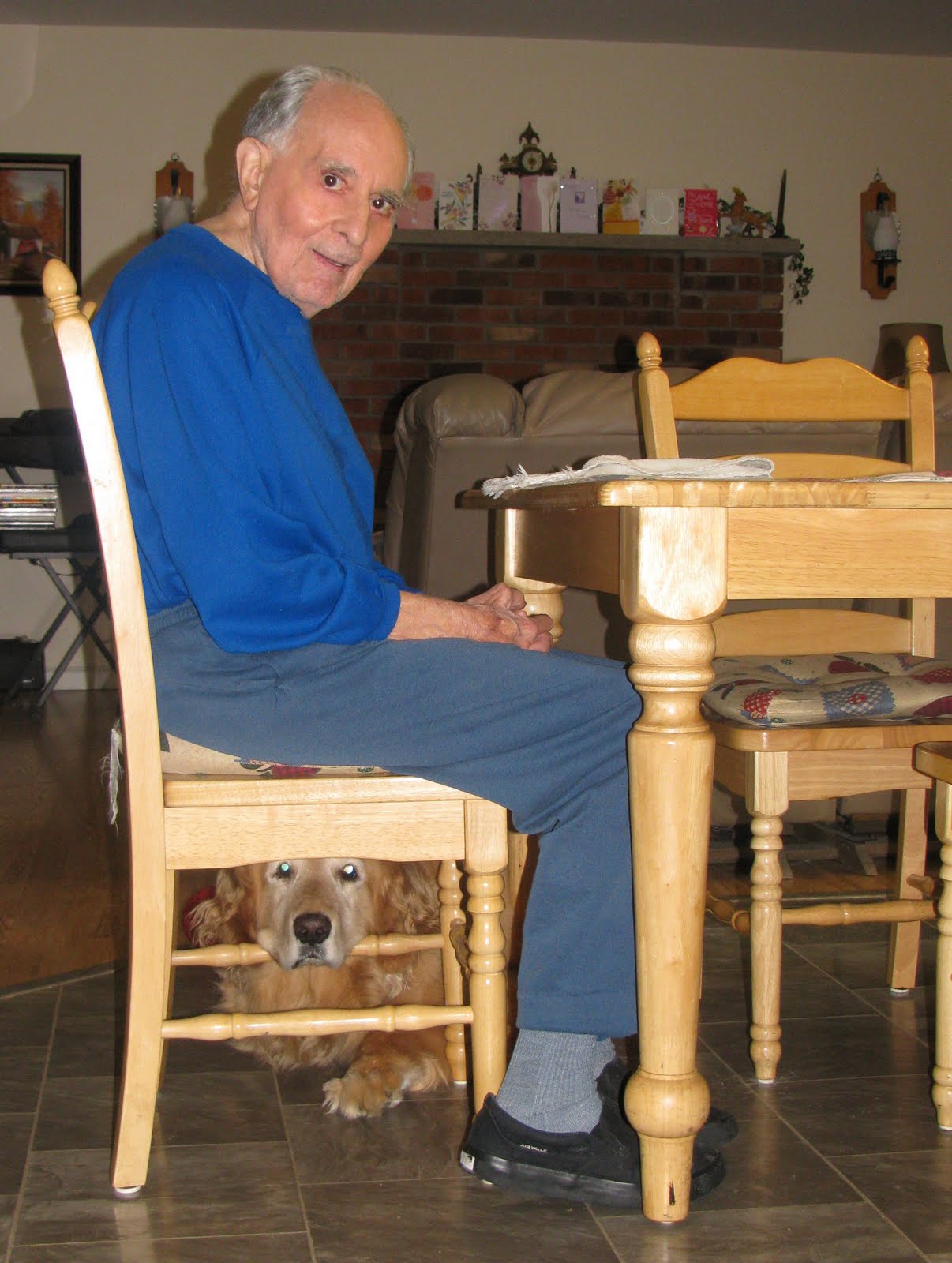
Today is my grandfather's 90th birthday!
In his honor, I am contributing to three very different, very meaningful organizations. I invite anyone who is interested to join us in celebrating Grandpa's birthday and supporting any of the organizations below. Click on their names to visit their websites and learn more about their work. Where appropriate, I've also linked to the pages I've created there.

Parkinson's Disease Foundation - Grandpa has Parkinson's Disease, "a movement disorder that is chronic and progressive, meaning that symptoms continue and worsen over time." Everyday tasks have become difficult for him: walking, moving, standing, sitting, eating, talking. Learn more about PD at the Foundation's website. View our fundraising page here. I've set a goal to raise $100, but there is no minimum or maximum amount requested.

Catholic Diocese of Memphis, Tennessee - Grandpa is my godfather. I often joke that, although I was confirmed United Methodist and raised in different Protestant churches, the fact that my godparents are Roman Catholic may have contributed to my deep desire for Catholic-Protestant kinship. I've decided to support the ministries of the diocese of Memphis in particular because it is the city where my grandparents met. Click here to view the different ministries that are accepting donations. There is no minimum or maximum amount requested.

Heifer International - For years, Grandpa helped to provide food for his family and community, working in his family's business as a butcher and laboring in his own vegetable garden. He bestowed upon me one of my favorite childhood nicknames: Sprout. Heifer International seeks to "work with communities to end hunger and poverty and care for the earth" by empowering communities and fostering self-reliance. Visit "Grandsprout's" registry here. Donations of as little as $1 can be given "Where Most Needed" and the cost of a particular animal/plant or share of an animal is $10+.
Thank you for your time!

The dog, of course, constantly watches
over Grandpa and is never far away.
May each and every year of your life be blessed, that you may be both protector and protected, healer and healed, lover and loved.
In his honor, I am contributing to three very different, very meaningful organizations. I invite anyone who is interested to join us in celebrating Grandpa's birthday and supporting any of the organizations below. Click on their names to visit their websites and learn more about their work. Where appropriate, I've also linked to the pages I've created there.

Parkinson's Disease Foundation - Grandpa has Parkinson's Disease, "a movement disorder that is chronic and progressive, meaning that symptoms continue and worsen over time." Everyday tasks have become difficult for him: walking, moving, standing, sitting, eating, talking. Learn more about PD at the Foundation's website. View our fundraising page here. I've set a goal to raise $100, but there is no minimum or maximum amount requested.

Catholic Diocese of Memphis, Tennessee - Grandpa is my godfather. I often joke that, although I was confirmed United Methodist and raised in different Protestant churches, the fact that my godparents are Roman Catholic may have contributed to my deep desire for Catholic-Protestant kinship. I've decided to support the ministries of the diocese of Memphis in particular because it is the city where my grandparents met. Click here to view the different ministries that are accepting donations. There is no minimum or maximum amount requested.

Heifer International - For years, Grandpa helped to provide food for his family and community, working in his family's business as a butcher and laboring in his own vegetable garden. He bestowed upon me one of my favorite childhood nicknames: Sprout. Heifer International seeks to "work with communities to end hunger and poverty and care for the earth" by empowering communities and fostering self-reliance. Visit "Grandsprout's" registry here. Donations of as little as $1 can be given "Where Most Needed" and the cost of a particular animal/plant or share of an animal is $10+.
Thank you for your time!
over Grandpa and is never far away.
May each and every year of your life be blessed, that you may be both protector and protected, healer and healed, lover and loved.
Labels:
Catholicism,
Family,
Outreach,
Parkinson's,
Photos
Monday, November 22, 2010
Roman Catholic: The Entertainment Factor
by C.M. Schott, contributor
Whenever something more-than-natural is afoot in film and TV—and often even when it isn’t—the protagonists turn Catholic. I had this realization brought home to me recently when, during an episode of Heroes, of all things, Peter Patrelli found himself in St. Patrick’s Cathedral trying (not quite in vain) to strike a bargain with Jesus.
This scene led me to think of so many situations in film, TV, literature, and music when the “je ne sais quoi” of Roman Catholicism seemed irresistible to artists: there are fallen-away Catholic characters like Sydney in The Pretender (remember that series?) and Grissom in CSI; sci-fi is rife with religious metaphor—even the “Gridlock” episode of Doctor Who features heavily Christological (if not Catholic) themes; and the explanation for all things Supernatural and Buffy always comes around to some (usually distorted) echo of Catholic dogma. And for that matter, can we forget the Jewish-born, irreligious Paul Simon with his “crayon rosary” and the poet’s crooked rhyme reading, “Holy holy is his sacrament”?
I think, before we pronounce a knee-jerk condemnation of the travesty that mainstream art usually makes of Catholic doctrine, it’s worth asking what exactly attracts even atheists to the Church when they deal with things greater than man—to the Church specifically, not just to theism or even to Christianity in general. The answers, I think, are not just positive but even hopeful, despite all appearances.
The obvious answer, which leads us into the more meaningful one, is that Catholics still do creepy.
Exhibit A: exorcism.

Exhibit B: well, do we really need an exhibit B? Let’s face it: Catholicism is second only to Voodoo when it comes to believing in things that go bump in the night. And despite whatever bad feelings remain toward Catholics from our brother Protestants or from mainstream entertainment at large, Catholicism is just more socially acceptable than Voodoo. More than that, it is somehow at once eerily foreign and deeply familiar, as a little of Catholicism runs in the veins of every social element with roots in the Middle Ages and beyond. The Catholic faith is an open playing field for entertaining situations that butt man up against anything that is bigger than himself.
Of course, sometimes that “bigger-than-man” opponent is nothing more than a corrupt hierarchy. We do have to admit that the Church plays no second fiddle when it comes to being a long-lived institution that has, at times, suffered legendary bouts with corruption, greed, and all the most human institutional failings. It provides a rather broad target for iconoclastic artists. See in this category: Robin Hood: Prince of Thieves, Kingdom of Heaven (or for that matter practically any crusade movie), and perhaps most of all The Da Vinci Code.
This use of the Church I feel to be (if saddening) a generally pedestrian anti-institutionalism, often having less to do with the Church itself than with the modern individualist taste for conspiracy theory. It must serve as a reminder to us, as members of the Church, to be always on our guard against corruption and the corrosive influence of power and human greed; it reminds us that we must present more than just our personal incarnations of Christianity to the world but rather we must represent the whole Church in our lives; but I don’t find much in this anti-institutionalism that has to do with the souls of its advocates.
What interests me is when the “bigger-than-man” opponent is indeed supernatural. We could go back further than Dracula, no doubt, to find instances of the ritual and beliefs of Catholicism being brought to bear as weapons against preternatural evil, but why bother? Here we have it in spades: Dracula, the menace-cum-seducer, is powerless before the Eucharist. In the same way, the demons in TV’s Supernatural are subject to the ritual of exorcism, and in that old Schwarzenegger movie End of Days, where he is of course single-handedly responsible for staving off the apocalypse, the scene they showed in all the previews was our hero on his knees in a Catholic church (to be interrupted by a dragon-Satan bursting through the floor, but more on that later).

When the evil moving about is not manmade but is an arm of the devil himself, the storehouse for solutions is inevitably the Catholic Church. And I believe it’s not just because of the ancient, mysterious ritual that surrounds Church proceedings, but rather, I think it is because Catholicism still admits to something many “religious people” have sidelined in favor of more appeasing and pragmatic approaches to spirituality: we still believe in ultimates. Ultimate truth and ultimate falsehood, ultimate evil (whence the interest from cinema), but most importantly, ultimate good. All these, working actively in today’s world just as they did in the days of the Bible. We may believe in possession, but we also believe in miracles. Grappling with the devil we have the angels.
That’s what entertainment so often lacks: why its demons, ghosts, and monsters leave us always a little dissatisfied, a little unconvinced, a little sheepish at how cheesy it all is. When our salvation rests on the success of a human being—whether unlikely hero or dashing heartthrob, whether played by Keanu Reeves or Sarah Michelle Geller—salvation always seems to fall short. At the very least, it’s temporary, at best lasting until the next sequel. Without the real ultimate good—let’s go ahead and say aloud the word “God”—the ultimate evil will never ring true, and victory will always feel incomplete. There’s just something woefully inadequate (or, worse, comically ridiculous) about arming the Governator with a grenade-launcher and thinking he could conceivably win out over the powers of darkness. Without God, the devil is a dragon to be charged at, or a cheat snatching at models and action figures; without heaven, hell is just an uncomfortable place to lodge somebody for the duration of a two-part episode. The sham is exciting enough, but it always leaves us wanting more than it could give.
Yet, that is exactly why I see such hope in art today. People seem to find it easier to believe in evil than in good, yet isn’t the draw of a compelling demon or vampire at least in part the secret desire for its salvation? If the good-versus-evil shadowplay of media leaves its consumers dissatisfied, might it not lead them to question what it is they really wanted in the first place? And what they really want (as much as even Christians would often like to deny it these days) is Christ. And he may be more politically correct in a church where “Jesus is your friend,” but he is all we could ever want when he is not only a friend but a lord, flanked by his angels and riding the clouds of heaven to harrow hell. When the world abandoned the hierarchy it lost something of the hero as well.
Popular movies and books and music appeal to the romantic in us, even if it is only to try and quash romance with cynicism. It is the romantic that wants happy endings without corniness and wants evil punished without gray areas. That’s why I think Catholicism always shows up in these movies: it is a romantic religion in which there are weapons to fight against what goes bump in the night (the things children recognize naturally and are only convinced don’t exist by a self-confident and jaded adult culture). It is a faith which promises a dawn without shadow. And at the same time it is a religion hard-as-nails (nine-inch nails, in fact) in which there are no excuses for not at least trying to be a hero. All roads can lead to God, and that is why when I look at entertainment these days I take more pleasure—even joy—than I take offense.
Unfortunately, of course, even if all roads can lead to God, it doesn’t mean they do. When Schwarzenegger’s kneeling plea for help is answered by the thunderous entrance of a monster, when the promise of the first seasons of Supernatural falls flat because it turns out that God is on vacation, all that potential I feel building in the set-up disappears in a puff of cynical cinema-smoke. I don’t know if there is room in the film world for a dogmatically correct Dracula, or in the TV world for a theologically sound Buffy or True Blood. I half doubt it (for what would those shows be if everybody kept their clothes on?).
But there is room for ultimate good alongside ultimate evil—Lewis and Tolkien (and their immensely successful recent film renditions) have proven that. And perhaps there is a role for entertainment in salvation, even if it serves aesthetics ahead of religion: if what people see reminds them that they really do want someone to save them—if it touches that deep-seeded desire for something that is both more real and more epic than CGI demons and their grubby gladiatorial opponents—then people of faith must declare the name of the savior. Art is already pointing its consumers upward, however inadvertently: let us stand along the roadside to open the gate, direct them toward heaven, and—pardon the expression—evangelize the hell out of them.
C.M. Schott likes blockbusters probably more than she should, and likes serious cinema “less than half as well as it deserves.” She is a student of literature but moonlights as a movie fan, music enthusiast, and (as of this post) a freelance blogger.
* Photos link to online sources. All rights reserved; no infringement is intended. AmenAbility.blogspot.com is a not-for-profit blog.
Whenever something more-than-natural is afoot in film and TV—and often even when it isn’t—the protagonists turn Catholic. I had this realization brought home to me recently when, during an episode of Heroes, of all things, Peter Patrelli found himself in St. Patrick’s Cathedral trying (not quite in vain) to strike a bargain with Jesus. This scene led me to think of so many situations in film, TV, literature, and music when the “je ne sais quoi” of Roman Catholicism seemed irresistible to artists: there are fallen-away Catholic characters like Sydney in The Pretender (remember that series?) and Grissom in CSI; sci-fi is rife with religious metaphor—even the “Gridlock” episode of Doctor Who features heavily Christological (if not Catholic) themes; and the explanation for all things Supernatural and Buffy always comes around to some (usually distorted) echo of Catholic dogma. And for that matter, can we forget the Jewish-born, irreligious Paul Simon with his “crayon rosary” and the poet’s crooked rhyme reading, “Holy holy is his sacrament”?
I think, before we pronounce a knee-jerk condemnation of the travesty that mainstream art usually makes of Catholic doctrine, it’s worth asking what exactly attracts even atheists to the Church when they deal with things greater than man—to the Church specifically, not just to theism or even to Christianity in general. The answers, I think, are not just positive but even hopeful, despite all appearances.
The obvious answer, which leads us into the more meaningful one, is that Catholics still do creepy.
Exhibit A: exorcism.

Exhibit B: well, do we really need an exhibit B? Let’s face it: Catholicism is second only to Voodoo when it comes to believing in things that go bump in the night. And despite whatever bad feelings remain toward Catholics from our brother Protestants or from mainstream entertainment at large, Catholicism is just more socially acceptable than Voodoo. More than that, it is somehow at once eerily foreign and deeply familiar, as a little of Catholicism runs in the veins of every social element with roots in the Middle Ages and beyond. The Catholic faith is an open playing field for entertaining situations that butt man up against anything that is bigger than himself.
Of course, sometimes that “bigger-than-man” opponent is nothing more than a corrupt hierarchy. We do have to admit that the Church plays no second fiddle when it comes to being a long-lived institution that has, at times, suffered legendary bouts with corruption, greed, and all the most human institutional failings. It provides a rather broad target for iconoclastic artists. See in this category: Robin Hood: Prince of Thieves, Kingdom of Heaven (or for that matter practically any crusade movie), and perhaps most of all The Da Vinci Code. This use of the Church I feel to be (if saddening) a generally pedestrian anti-institutionalism, often having less to do with the Church itself than with the modern individualist taste for conspiracy theory. It must serve as a reminder to us, as members of the Church, to be always on our guard against corruption and the corrosive influence of power and human greed; it reminds us that we must present more than just our personal incarnations of Christianity to the world but rather we must represent the whole Church in our lives; but I don’t find much in this anti-institutionalism that has to do with the souls of its advocates.
What interests me is when the “bigger-than-man” opponent is indeed supernatural. We could go back further than Dracula, no doubt, to find instances of the ritual and beliefs of Catholicism being brought to bear as weapons against preternatural evil, but why bother? Here we have it in spades: Dracula, the menace-cum-seducer, is powerless before the Eucharist. In the same way, the demons in TV’s Supernatural are subject to the ritual of exorcism, and in that old Schwarzenegger movie End of Days, where he is of course single-handedly responsible for staving off the apocalypse, the scene they showed in all the previews was our hero on his knees in a Catholic church (to be interrupted by a dragon-Satan bursting through the floor, but more on that later). 
When the evil moving about is not manmade but is an arm of the devil himself, the storehouse for solutions is inevitably the Catholic Church. And I believe it’s not just because of the ancient, mysterious ritual that surrounds Church proceedings, but rather, I think it is because Catholicism still admits to something many “religious people” have sidelined in favor of more appeasing and pragmatic approaches to spirituality: we still believe in ultimates. Ultimate truth and ultimate falsehood, ultimate evil (whence the interest from cinema), but most importantly, ultimate good. All these, working actively in today’s world just as they did in the days of the Bible. We may believe in possession, but we also believe in miracles. Grappling with the devil we have the angels.
That’s what entertainment so often lacks: why its demons, ghosts, and monsters leave us always a little dissatisfied, a little unconvinced, a little sheepish at how cheesy it all is. When our salvation rests on the success of a human being—whether unlikely hero or dashing heartthrob, whether played by Keanu Reeves or Sarah Michelle Geller—salvation always seems to fall short. At the very least, it’s temporary, at best lasting until the next sequel. Without the real ultimate good—let’s go ahead and say aloud the word “God”—the ultimate evil will never ring true, and victory will always feel incomplete. There’s just something woefully inadequate (or, worse, comically ridiculous) about arming the Governator with a grenade-launcher and thinking he could conceivably win out over the powers of darkness. Without God, the devil is a dragon to be charged at, or a cheat snatching at models and action figures; without heaven, hell is just an uncomfortable place to lodge somebody for the duration of a two-part episode. The sham is exciting enough, but it always leaves us wanting more than it could give.
Yet, that is exactly why I see such hope in art today. People seem to find it easier to believe in evil than in good, yet isn’t the draw of a compelling demon or vampire at least in part the secret desire for its salvation? If the good-versus-evil shadowplay of media leaves its consumers dissatisfied, might it not lead them to question what it is they really wanted in the first place? And what they really want (as much as even Christians would often like to deny it these days) is Christ. And he may be more politically correct in a church where “Jesus is your friend,” but he is all we could ever want when he is not only a friend but a lord, flanked by his angels and riding the clouds of heaven to harrow hell. When the world abandoned the hierarchy it lost something of the hero as well.Popular movies and books and music appeal to the romantic in us, even if it is only to try and quash romance with cynicism. It is the romantic that wants happy endings without corniness and wants evil punished without gray areas. That’s why I think Catholicism always shows up in these movies: it is a romantic religion in which there are weapons to fight against what goes bump in the night (the things children recognize naturally and are only convinced don’t exist by a self-confident and jaded adult culture). It is a faith which promises a dawn without shadow. And at the same time it is a religion hard-as-nails (nine-inch nails, in fact) in which there are no excuses for not at least trying to be a hero. All roads can lead to God, and that is why when I look at entertainment these days I take more pleasure—even joy—than I take offense.
Unfortunately, of course, even if all roads can lead to God, it doesn’t mean they do. When Schwarzenegger’s kneeling plea for help is answered by the thunderous entrance of a monster, when the promise of the first seasons of Supernatural falls flat because it turns out that God is on vacation, all that potential I feel building in the set-up disappears in a puff of cynical cinema-smoke. I don’t know if there is room in the film world for a dogmatically correct Dracula, or in the TV world for a theologically sound Buffy or True Blood. I half doubt it (for what would those shows be if everybody kept their clothes on?).But there is room for ultimate good alongside ultimate evil—Lewis and Tolkien (and their immensely successful recent film renditions) have proven that. And perhaps there is a role for entertainment in salvation, even if it serves aesthetics ahead of religion: if what people see reminds them that they really do want someone to save them—if it touches that deep-seeded desire for something that is both more real and more epic than CGI demons and their grubby gladiatorial opponents—then people of faith must declare the name of the savior. Art is already pointing its consumers upward, however inadvertently: let us stand along the roadside to open the gate, direct them toward heaven, and—pardon the expression—evangelize the hell out of them.
C.M. Schott likes blockbusters probably more than she should, and likes serious cinema “less than half as well as it deserves.” She is a student of literature but moonlights as a movie fan, music enthusiast, and (as of this post) a freelance blogger.
* Photos link to online sources. All rights reserved; no infringement is intended. AmenAbility.blogspot.com is a not-for-profit blog.
Tuesday, September 28, 2010
Subscribe to:
Posts (Atom)